Last reviewed: August 3, 2026 · By the RaceYear team
Short answer: A race day checklist is your whole day broken into stations — night-before load-out, the drive, pit gate paperwork, unload and setup, pre-hot-lap checks, a fastener-and-pressure pass between every session, a walkaround before the car goes back in the trailer, and load-out. Build yours off your own class rulebook.
Key takeaways
Nobody loses a race night in one big moment. You lose it in twenty small ones: the torque wrench still on the bench at home, the hot laps you spent hunting a valve stem cap, the lug you never re-checked, the pit gate line you joined a minute after sign-in closed. A race day checklist doesn’t make you faster. It makes you available — on track for every session, in a car that’s still the car you loaded.
Two things this post is not. It’s not the shop week — that’s the weekly race car maintenance checklist. And it’s not the tech list; belts, cage and weight live in passing tech inspection. This is the day itself, in order.
A race day checklist is one list split into stations, not one long list you run once. Each station has a single job, and nothing carries into the next one unfinished.
| When | The job | The checks that actually bite |
|---|---|---|
| Night before — load-out | Loading car and consumables | Fuel jugs sealed, tires picked and aired, spares restocked, driver gear aboard, rulebook and gate cash |
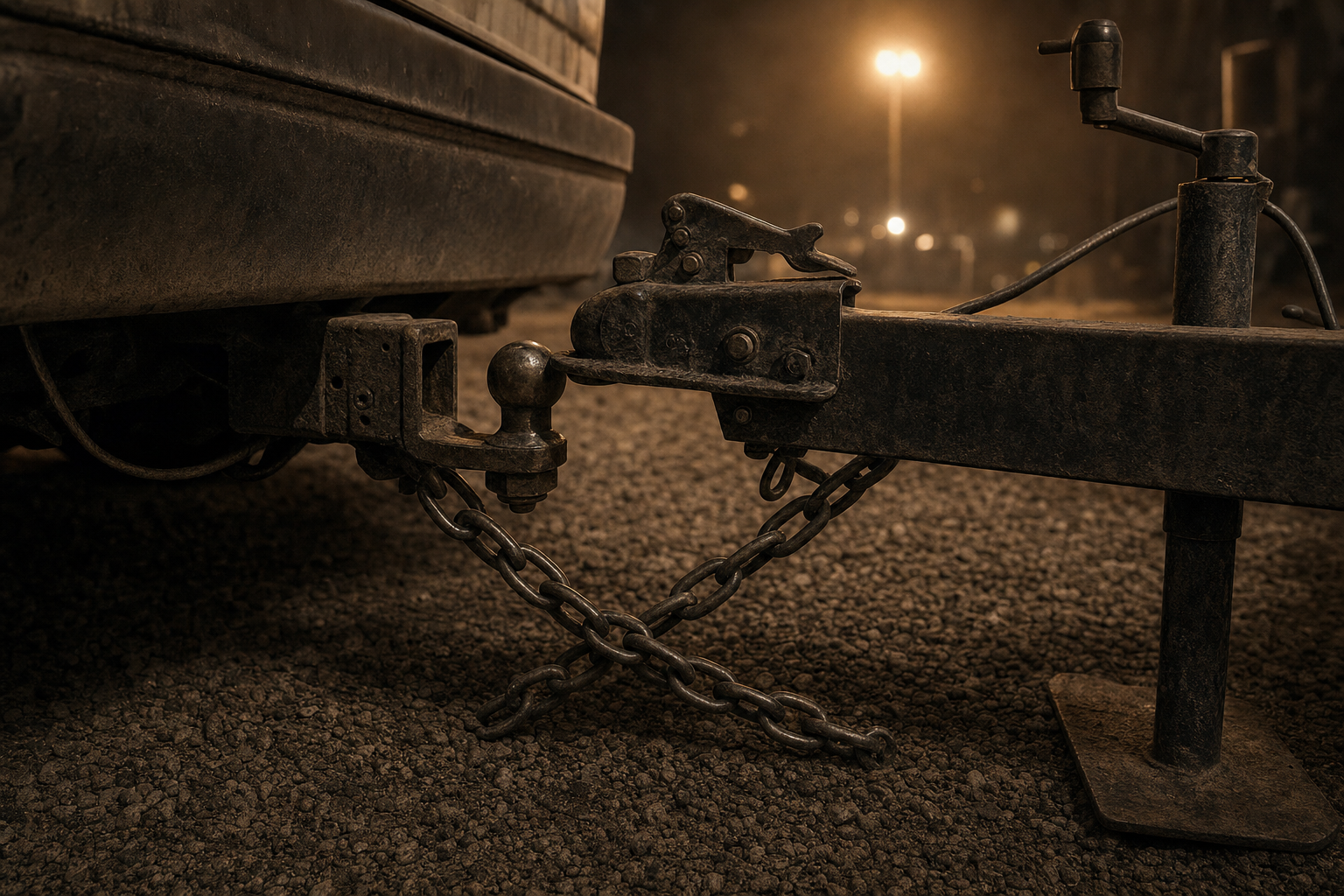
| Morning of — the drive | Getting there whole | Trailer pressures and lug torque, hitch, chains, breakaway cable, lights, straps, chocks |
| Arrival — pit gate | Paperwork and position | Pit pass for every crew member, membership card, minor waiver, sign-in before the deadline, transponder |
| Unload — pit setup | Building a workspace | Car level and chocked, jack and stands staged, air ready, gauges and pyrometer out, extinguisher reachable |
| Before hot laps | Confirming the car you brought | Fluid levels, lug torque, beadlock bolts, cold pressures, stagger, belts latched and in date, cockpit clear |
| Between hot laps and the heat | Reading what the track told you | Tire temps hot, pressures logged and reset, stagger re-check, fastener pass, leak hunt, one change |
| Between heat and feature | One change, not five | Pressures for current conditions, fuel for the distance, one deliberate change, re-torque what you touched |
| After the feature | Finding what the night cost | Walkaround for leaks, cracks, bends and rubs, hub temps by hand, tire wear, notes written trackside |
| Load-out | Setting up next week | Strap and chock, restock what you burned, broken parts in a fix-me pile, pit picked up |
Copy that shape. Don’t copy anybody’s numbers — pressures, torque values, minimum weight and legal tires are set by your class and your track, and two tracks an hour apart won’t match.
Two boxes. The permanent box never leaves the trailer; the weekly box gets loaded, used and restocked every week. Mixing them is how you end up two hours from home without a torque wrench.
Lives in the trailer, always:
Gets loaded every week:
Everybody over-packs the wrong spares. Two questions filter the list: has it ended your night before, and can you change it in a pit stall in twenty minutes?
That usually lands on brake pads and fluid, a hub, a tie rod or radius rod, wheels and lug nuts, hoses and fittings, a fuel pump, plugs and wires. Not the third set of gears you’ve never swapped trackside.
A pit pass, a signed waiver, and at most sanctioned tracks a membership card. The gate wants all of it before it lets you in, and two real rulebooks show how much the specifics vary.
Fairbury Speedway’s rules state that “ALL PERSONS MUST SIGN IN AND PAY FOR A PIT PASS BEFORE ENTERING THE PIT AREA” and that “ANY PERSON 16 YEARS OF AGE AND UNDER MUST HAVE A SIGNED PARENTAL CONSENT FORM.” Drivers carry a DIRTcar membership card, raceceivers are “MANDATORY FOR ALL CLASSES,” and all cars must be signed in by 5:30 p.m. — a driver not signed in by 6:00 p.m. gets no qualifying time and starts at the back of a heat race (Fairbury Speedway).
Anderson Speedway, an asphalt short track, wants different things: a “visible and valid pit pass” at $30 for members and $35 for non-members at regular 2025 events, nobody under 18 “without a parent waiver form completed, and a copy of their birth certificate,” pit crew at least 14, and an owner or representative who “MUST report to the pit office upon entering the pits.” Skip the drivers meeting and “you are subject to being placed at the tail of the races” (Anderson Speedway).
Those two agree that every person entering the pits needs a pass, and then diverge on nearly every specific, so build your gate list from your own sanctioning body and track rulebook. Go to the drivers meeting either way — that’s where the night’s format lands, redraw or straight-up, how many transfer out of each heat, whether there’s a consi, and any rule that changed since last week.
Pick your spot before you drop the ramp: level ground, room to swing the door, space to get the car off the jack. Then build the same workspace every week. Redline’s pit equipment guide makes the point that organization is the whole game — “every tool and every piece of gear has a place.” Gauges, pyrometer and air within reach. Jack and stands on the side you’ll work from. Tires racked. Your extinguisher grabbable in three steps, separate from the “operating onboard fire extinguishers” Anderson’s rulebook requires in the car. Then walk the tech line, tower and staging gate before you need them.
Before hot laps you’re confirming the car on the ground is the car you built in the shop. Nothing here is a repair job — if you’re fixing something at this stage, the shop week already failed you.
That’s a five-minute list when the shop week went right. If it takes forty-five minutes, the problem isn’t race day.
Hot laps are data. Between hot laps and your heat race, your job is to read that data and make exactly one decision from it.
Between the heat and the feature you have the least time and the most information of the whole night. Spend it on the track as it is now, not the track you hot-lapped on.
Set pressures for current conditions. Fuel for the distance, and know your weight rule first — minimum weight is often checked with the driver after the race, so a car that scales fine full and cold can come up light hot and nearly empty (passing tech inspection covers that).
Then make one change. One. Five changes and you’ll finish the feature knowing nothing about any of them. Re-torque what you touched, repeat the thirty-second safety walk — belts, net, extinguisher pin, raceceiver, battery — and get water in the driver before they strap in.
The five minutes after the feature are worth an hour on Tuesday. The car just ran hard, and it’ll never be more honest about what’s wrong with it.
Everything you find becomes a shop task with a name on it, not a memory. The fixing is next week’s job — that’s the weekly race car maintenance checklist.
The trailer you close at midnight is the trailer you open next week, so close it honest.
Split it by station: night-before load-out, the drive, pit gate paperwork, unload and pit setup, pre-hot-lap checks, a fastener-and-pressure pass between each session, the post-race walkaround, and load-out. The specific items — pressures, torque values, weight, legal tires — come from your class rulebook and your track, not from a generic list.
Keep tools, jack and stands, tire equipment, fluids, a fire extinguisher, first aid kit, tow strap and spare hardware permanently in the trailer, then load fuel, tires, driver gear, pit gate cash and food every week. Add spares only for parts that have ended your night before and that you can genuinely change in a pit stall.
Reset tire pressures for the track as it is now, fuel for the distance with your weight rule in mind, make exactly one setup change, and re-torque anything you touched. Then repeat the thirty-second safety walk — belts, window net, extinguisher pin, raceceiver, battery — and get water in the driver before they strap in.
Early enough to beat your track’s posted sign-in deadline with room left over. Fairbury Speedway, for example, requires cars signed in by 5:30 p.m., and a driver not signed in by 6:00 p.m. loses their qualifying time and starts at the back of a heat race. Work backward from your track’s times so you can unload, set up, clear tech and still make the drivers meeting without sprinting.
Check them between sessions — heat cycles and vibration are exactly what loosens wheel hardware, and a wheel coming off is one of the few failures that ends more than your night. Use a torque wrench in a star pattern rather than an impact gun, and use the value your wheel, stud and hub manufacturers specify.
You can absolutely run this off a clipboard. A laminated sheet on the trailer wall, a notebook for pressures and stagger, a whiteboard for what you burned. Racers have done it that way forever and it works, right up until the sheet blows into the next pit and you’re rebuilding the list from memory at 6 p.m.
RacePrep is built to run this exact routine without the paper falling apart:
Build your own race day checklist in RacePrep and stop racing off memory — free demo mode, no card, so you can lay out your entire night before the next one.
Then close the loop on either end: the weekly race car maintenance checklist covers the shop work between races, and passing tech inspection covers what happens when you roll to the line. One line on that list has a date printed on it: racing safety gear expiration dates covers which ones tech actually checks.
Tripped up by a term above? Hot laps, stagger, consi and the rest are all spelled out in the RaceYear racing glossary.
Setup notes, maintenance logs, race-day plans, and tax tracking — all in your pocket.
Get the apps